Retatrutide Weight Loss Results
Retatrutide has produced some of the most impressive weight loss results ever seen in clinical trials for obesity treatment. The Phase 2 trial, published in the New England Journal of Medicine in 2023, established retatrutide as potentially the most effective anti-obesity medication in development [1].
The Phase 2 Obesity Trial (NEJM 2023)
The pivotal Phase 2 trial enrolled 338 adults with obesity (BMI ≥30) or overweight (BMI ≥27) with at least one weight-related comorbidity. Participants were randomized to receive once-weekly subcutaneous injections of retatrutide at various doses (1 mg, 4 mg, 8 mg, or 12 mg) or placebo for 48 weeks.
Weight Loss by Dose
The results were dose-dependent and striking:
- Placebo: -2.1% body weight change
- 1 mg dose: -8.7% body weight change
- 4 mg dose: -17.1% body weight change
- 8 mg dose: -22.8% body weight change
- 12 mg dose: -24.2% body weight change
At the highest dose (12 mg), participants lost an average of 24.2% of their body weight over 48 weeks. Among participants who completed treatment, the weight loss was even more pronounced, reaching approximately 26% at the 12 mg dose.
Proportion Achieving Clinically Meaningful Weight Loss
The percentage of participants achieving various weight loss thresholds was remarkable:
- ≥5% weight loss: 92% of the 12 mg group (vs 27% placebo)
- ≥10% weight loss: 83% of the 12 mg group
- ≥15% weight loss: 63% of the 12 mg group
- ≥20% weight loss: 52% of the 12 mg group
These response rates substantially exceed those reported for semaglutide 2.4 mg (Wegovy) and are comparable to or exceed tirzepatide's highest doses.
Why Is Retatrutide So Effective?
The superior weight loss with retatrutide compared to single or dual agonists is attributed to the addition of glucagon receptor activation. While GLP-1 and GIP agonism primarily reduce food intake through appetite suppression and delayed gastric emptying, glucagon receptor activation adds a complementary mechanism: increased energy expenditure. This means retatrutide attacks obesity from both sides — reducing caloric intake AND increasing caloric burn [2].
Preclinical studies showed that the glucagon component specifically increases resting energy expenditure and promotes lipid oxidation, contributing to greater fat mass loss. This dual approach (reduced intake + increased expenditure) may explain why retatrutide achieves weight loss percentages approaching those of bariatric surgery [3].
Weight Loss Trajectory
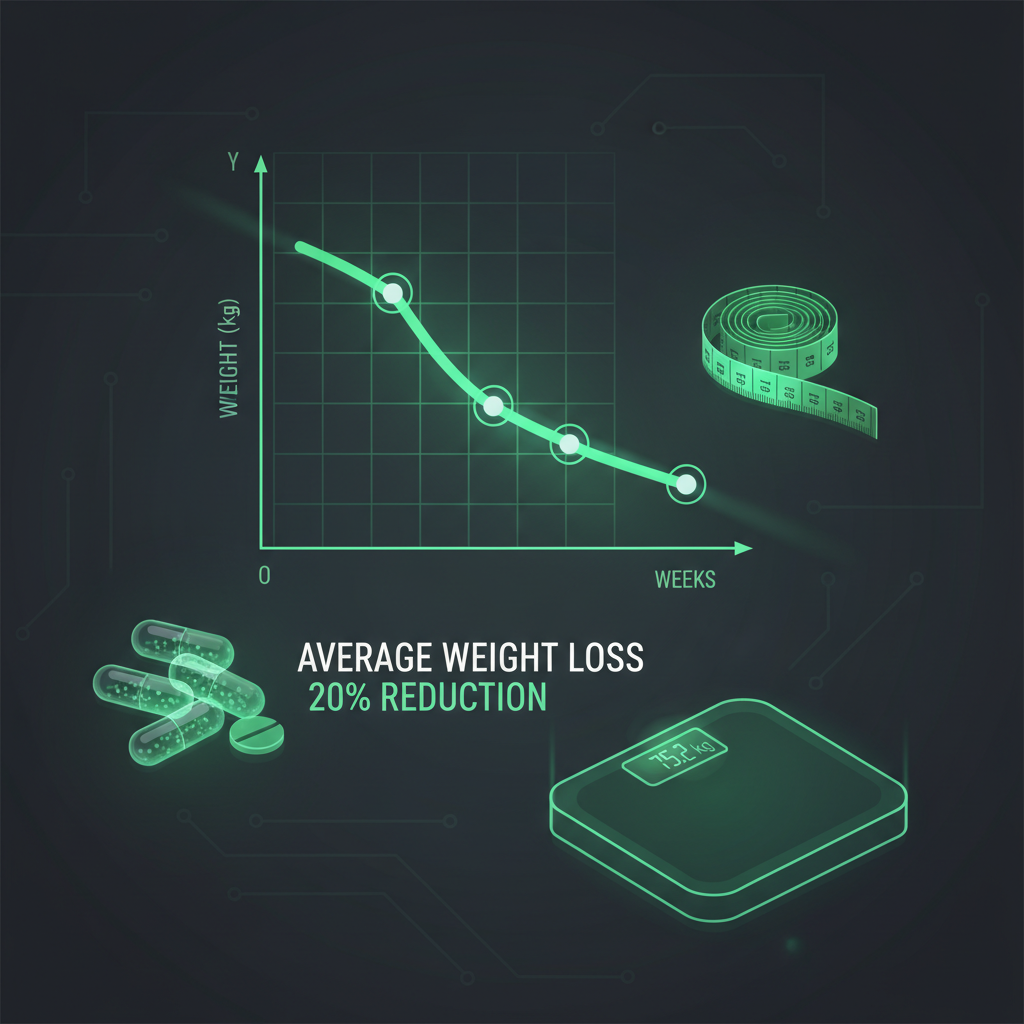
An important observation from the Phase 2 trial was that weight loss had not plateaued at 48 weeks in the higher-dose groups. The weight loss curves were still trending downward at study end, suggesting that longer treatment durations could produce even greater reductions. This is particularly notable because most GLP-1 agonist trials show weight loss plateauing around 60-68 weeks.
Phase 3 Results Preview
In December 2025, Eli Lilly announced results from the first Phase 3 trial (TRANSCEND-OB). While full data have not yet been published in a peer-reviewed journal, preliminary results confirmed substantial weight loss consistent with Phase 2 findings, with the 12 mg dose group achieving an average of approximately 25% weight loss.
Systematic Review and Meta-Analysis
A 2025 systematic review and meta-analysis of all available retatrutide randomized controlled trials confirmed the drug's significant efficacy for weight reduction across multiple studies, with a favorable benefit-risk profile [4].
Implications
If Phase 3 trials confirm these results and retatrutide receives FDA approval, it would represent a significant advancement in pharmacological obesity treatment, potentially offering weight loss outcomes that approach those of surgical interventions like gastric bypass.
References
-
Jastreboff AM, et al. "Triple-Hormone-Receptor Agonist Retatrutide for Obesity — A Phase 2 Trial." New England Journal of Medicine. 2023;389(6):514-526. PubMed: 37366315
-
Coskun T, et al. "LY3437943, a novel triple glucagon, GIP, and GLP-1 receptor agonist for glycemic control and weight loss." Cell Metabolism. 2022;34(9):1234-1247. PubMed: 35985340
-
Doggrell SA. "Retatrutide showing promise in obesity (and type 2 diabetes)." Expert Review of Endocrinology & Metabolism. 2023;18(6):495-498. PubMed: 37947489
-
Abouelmagd AA, et al. "Efficacy and safety of retatrutide, a novel GLP-1, GIP, and glucagon receptor agonist for obesity treatment: a systematic review and meta-analysis of randomized controlled trials." Baylor University Medical Center Proceedings. 2025. PubMed: 40291085