The Evolution of Incretin-Based Therapies
The landscape of obesity and diabetes pharmacotherapy has evolved rapidly from single-receptor GLP-1 agonists to multi-receptor agonists. Understanding how these three drugs compare is essential for clinicians and patients evaluating treatment options.
Mechanism of Action Comparison
Semaglutide (Ozempic/Wegovy)
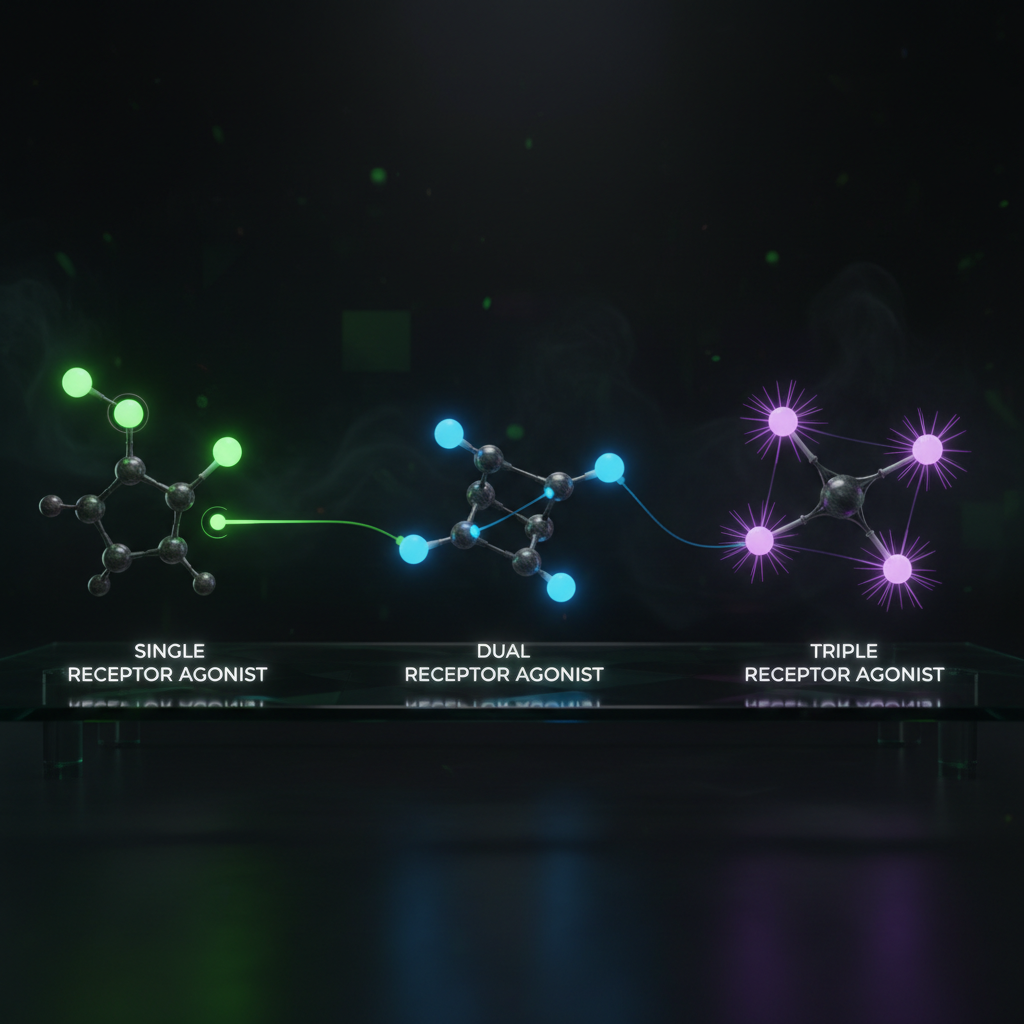
Semaglutide is a single GLP-1 receptor agonist. It activates only the GLP-1 receptor, reducing appetite, slowing gastric emptying, and enhancing insulin secretion. Approved by the FDA for both type 2 diabetes (Ozempic) and chronic weight management (Wegovy).
Tirzepatide (Mounjaro/Zepbound)
Tirzepatide is a dual GIP/GLP-1 receptor agonist. It activates both GIP and GLP-1 receptors, providing enhanced metabolic effects compared to GLP-1 alone. FDA-approved for type 2 diabetes (Mounjaro) and obesity (Zepbound).
Retatrutide (LY3437943)
Retatrutide is a triple GIP/GLP-1/glucagon receptor agonist. It activates all three receptors, adding glucagon-mediated increases in energy expenditure and liver fat reduction to the appetite-suppressing effects of GLP-1 and GIP. Currently in Phase 3 clinical trials; not yet FDA-approved.
Weight Loss Efficacy Comparison
Cross-trial comparisons must be interpreted cautiously since these drugs were not tested head-to-head in the same study. However, the available data suggest a clear efficacy gradient:
| Drug | Trial Duration | Max Weight Loss | Receptor Targets |
|---|---|---|---|
| Semaglutide 2.4 mg | 68 weeks | ~16.0% | GLP-1 |
| Tirzepatide 15 mg | 72 weeks | ~22.5% | GIP + GLP-1 |
| Retatrutide 12 mg | 48 weeks | ~24.2% | GIP + GLP-1 + Glucagon |
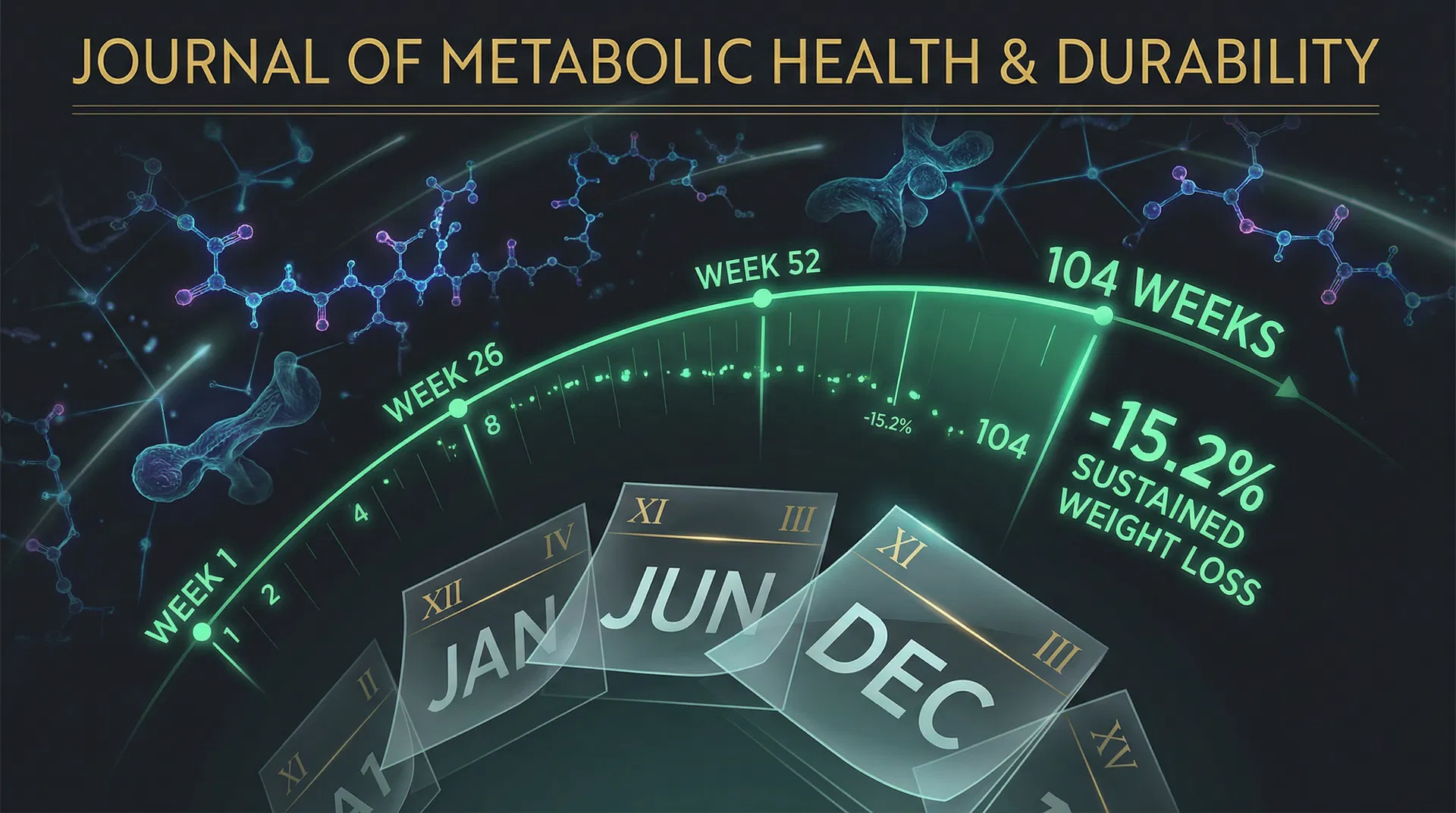
Notably, retatrutide achieved its maximum weight loss in only 48 weeks — with the weight loss curve still declining — while semaglutide and tirzepatide required 68-72 weeks to reach their plateaus [1][2][3].
A 2025 comparative analysis found that retatrutide demonstrated superior efficacy in both absolute and percentage weight reduction compared to tirzepatide, though with a slightly higher incidence of gastrointestinal adverse events [4].
Blood Sugar Control
For type 2 diabetes, all three drugs significantly reduce HbA1c:
- Semaglutide: A1C reduction of ~1.5-1.8%
- Tirzepatide: A1C reduction of ~2.0-2.4%
- Retatrutide: A1C reduction of ~1.7-2.0% (Phase 3 TRANSCEND-T2D-1)
Tirzepatide appears to have the strongest glycemic control, while retatrutide's glucagon component may partially offset its glucose-lowering effects (glucagon raises blood sugar), though this is more than compensated by the GLP-1 and GIP activity.
Liver Fat Reduction
This is where retatrutide has a distinct advantage. In a Phase 2a trial for metabolic dysfunction-associated steatotic liver disease (MASLD/NAFLD), retatrutide 12 mg achieved up to 82% reduction in liver fat at 48 weeks, with many participants achieving complete normalization of liver fat content [5]. Neither semaglutide nor tirzepatide has demonstrated liver fat reductions of this magnitude in clinical trials.
Side Effect Profiles
All three drugs share similar gastrointestinal side effects (nausea, vomiting, diarrhea, constipation), which are primarily GLP-1-mediated. Retatrutide's glucagon component adds some unique considerations:
- Heart rate increases: Slightly more pronounced with retatrutide
- Transient liver enzyme elevations: Observed in some retatrutide patients, likely related to glucagon-mediated hepatic effects
- Gastrointestinal events: Generally similar across all three, though some analyses suggest slightly higher rates with retatrutide
Dosing and Administration
All three are administered as once-weekly subcutaneous injections with dose titration schedules to minimize GI side effects.
The Bottom Line
Each generation of incretin therapy has built upon the last. Semaglutide proved that GLP-1 agonism could produce meaningful weight loss. Tirzepatide showed that adding GIP agonism enhanced efficacy further. Retatrutide suggests that adding glucagon receptor activation — particularly for energy expenditure and liver fat — may push the boundaries even further. However, retatrutide remains investigational and awaits Phase 3 confirmation and regulatory approval.
References
-
Jastreboff AM, et al. "Triple-Hormone-Receptor Agonist Retatrutide for Obesity — A Phase 2 Trial." NEJM. 2023;389(6):514-526. PubMed: 37366315
-
Rosenstock J, et al. "Retatrutide, a GIP, GLP-1 and glucagon receptor agonist, for people with type 2 diabetes." The Lancet. 2023;402(10401):529-544. PubMed: 37385280
-
Coskun T, et al. "LY3437943, a novel triple glucagon, GIP, and GLP-1 receptor agonist for glycemic control and weight loss." Cell Metabolism. 2022;34(9):1234-1247. PubMed: 35985340
-
Salhab A, et al. "Comparative Efficacy and Safety of Tirzepatide vs Retatrutide." Journal of the Endocrine Society. 2025;9(Suppl 1). PMC: 12544991
-
Sanyal AJ, et al. "Triple hormone receptor agonist retatrutide for metabolic dysfunction-associated steatotic liver disease: a randomized phase 2a trial." Nature Medicine. 2024;30:2037-2048. PMC: 11271400