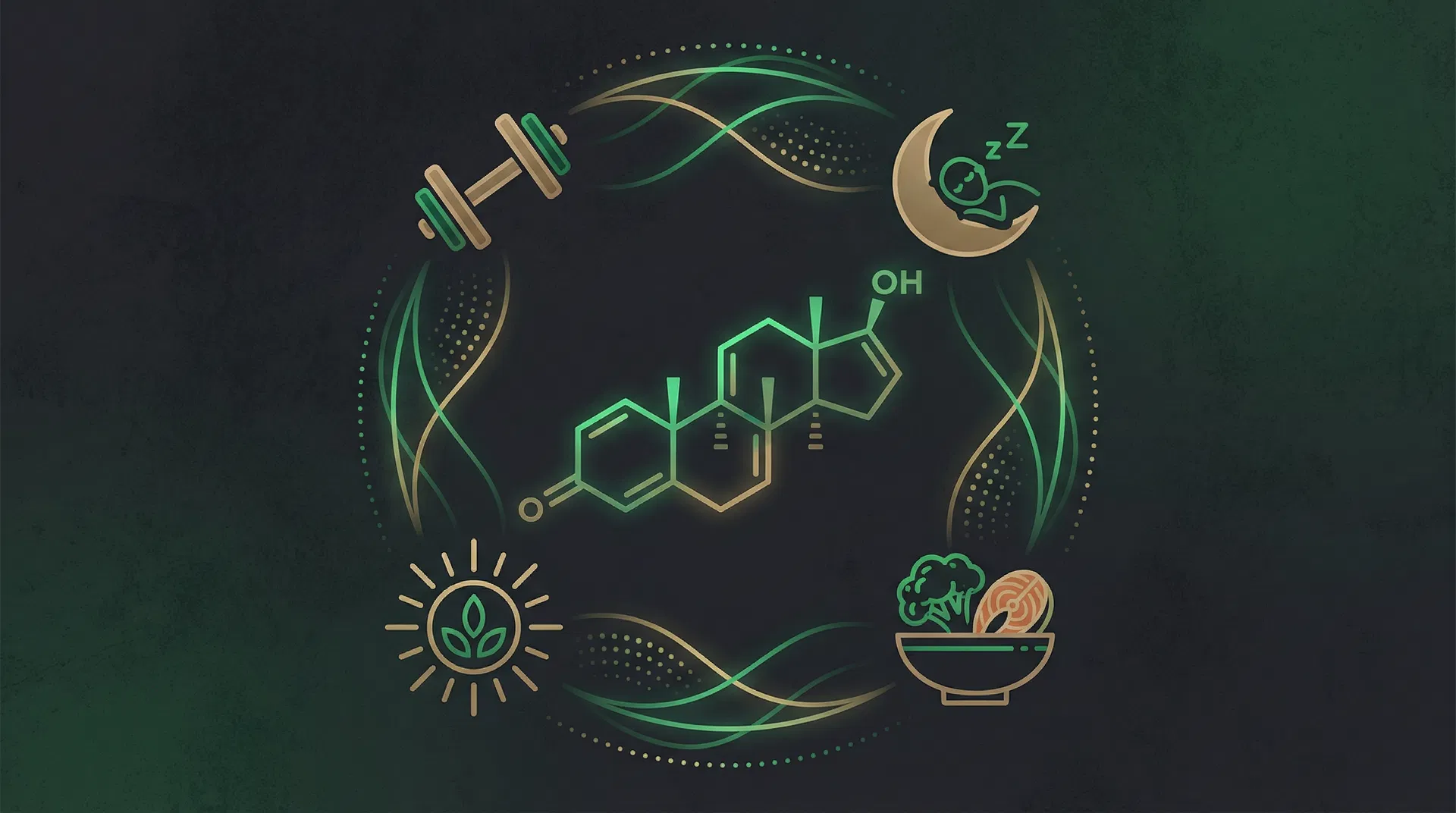
Natural Testosterone Optimization: A Guide to Sleep, Exercise, Diet, and Lifestyle
What It Is
Natural testosterone optimization refers to the use of evidence-based lifestyle, diet, and exercise strategies to support the body's own production of testosterone. This approach can be a first-line strategy for men experiencing symptoms of low testosterone, or it can be used alongside Testosterone Replacement Therapy (TRT) to enhance overall results and well-being. The goal is to create an internal environment that is conducive to healthy hormone function by addressing key factors that are known to influence the hypothalamic-pituitary-gonadal (HPG) axis, the body's hormonal command center.
How It Works
The body's ability to produce testosterone is not static; it is dynamically influenced by a host of external and internal factors. Natural optimization works by systematically addressing these variables. This includes reducing factors that suppress testosterone, such as chronic stress, poor sleep, and excess body fat, while simultaneously promoting factors that enhance its production. For example, resistance training signals the body to produce more testosterone to support muscle repair and growth. Similarly, certain nutrients are direct precursors or essential cofactors in the testosterone synthesis pathway. By making targeted improvements across these domains, it is possible to support and enhance the body's natural testosterone output.
Key Research
Scientific research has identified several key lifestyle interventions that have a measurable impact on testosterone levels. A 2026 review by Shypilova et al. highlighted the synergistic effects of combining exercise, nutrition, and bioactive compounds to combat age-related testosterone decline. The study emphasized that integrative approaches are more effective than single-modality interventions.
Resistance training is one of the most well-documented methods for boosting testosterone. A study by Hooper et al. (2017) detailed the endocrinological responses to resistance exercise, noting both acute spikes and long-term elevations in testosterone with consistent training. The research suggests that multi-joint, compound exercises are particularly effective.
Sleep is another critical pillar of hormonal health. A study on sleep deprivation found that restricting sleep to five hours per night for one week decreased testosterone levels by 10-15% in healthy young men. This underscores the importance of obtaining 7-9 hours of quality sleep per night.
Nutritional status is also paramount. A systematic review by Te et al. (2023) established a clear correlation between serum zinc levels and testosterone. Zinc is a critical mineral for testosterone production, and deficiency is linked to hypogonadism. Similarly, Vitamin D deficiency is associated with lower testosterone levels.
Finally, stress management plays a vital role. Chronic stress leads to elevated cortisol, a hormone that has an inverse relationship with testosterone. Managing stress through techniques like mindfulness, meditation, or yoga can help to lower cortisol and, in turn, support healthy testosterone levels.
Benefits
The benefits of natural testosterone optimization extend beyond just hormone levels. By focusing on foundational health principles, individuals can expect to see improvements in:
- Body Composition: Increased muscle mass and reduced body fat.
- Energy and Vitality: Improved energy levels and a greater sense of well-being.
- Mood and Cognitive Function: Enhanced mood, focus, and mental clarity.
- Libido and Sexual Function: Improved sex drive and performance.
- Overall Health: Better cardiovascular health, improved insulin sensitivity, and stronger bones.
Risks & Side Effects
Natural testosterone optimization is generally very safe, as it focuses on healthy lifestyle changes rather than introducing exogenous hormones. However, there are a few considerations:
- Overtraining: Excessive exercise without adequate recovery can actually increase cortisol and lower testosterone. It is important to listen to your body and incorporate rest days.
- Nutrient Deficiencies/Toxicities: While supplementation can be beneficial, it is possible to take too much of certain nutrients. It is always best to consult with a healthcare provider before beginning a new supplement regimen.
- Unrealistic Expectations: Natural optimization can lead to significant improvements, but it may not be sufficient for men with clinically low testosterone levels (hypogonadism). In such cases, TRT may still be necessary.
Practical Considerations
Implementing a natural testosterone optimization plan involves a multi-faceted approach:
- Resistance Training: Aim for 3-4 sessions per week, focusing on compound movements like squats, deadlifts, bench presses, and overhead presses. Progressive overload is key.
- Sleep: Prioritize 7-9 hours of quality, uninterrupted sleep per night. Create a relaxing bedtime routine and optimize your sleep environment.
- Diet: Focus on a whole-foods diet rich in lean proteins, healthy fats, and complex carbohydrates. Ensure adequate intake of zinc (oysters, red meat, pumpkin seeds) and Vitamin D (sunlight exposure, fatty fish, fortified foods).
- Stress Management: Incorporate stress-reducing activities into your daily routine, such as meditation, deep breathing exercises, or spending time in nature.
- Body Fat Reduction: If you are overweight, losing excess body fat is one of the most effective ways to boost testosterone. A combination of diet and exercise is the best approach.
The Bottom Line
Natural testosterone optimization is a powerful and effective strategy for supporting healthy hormone levels. By focusing on the foundational pillars of health—sleep, exercise, diet, and stress management—men can create an internal environment that is conducive to optimal testosterone production. While it may not be a substitute for TRT in all cases, it is an essential component of any comprehensive plan to improve hormonal health and overall well-being.
This information is for educational purposes only. Always consult a licensed healthcare provider before starting any hormone therapy protocol.